

Easy Sweet Potato and Sage Frittata
Hello fall! Meet my Easy Sweet Potato and Sage Frittata, a simple one-pan recipe designed to make your mornings effortless. This healthy Italian-style omelet (or crustless quiche) features a comforting blend of sweet potatoes and fresh sage leaves, offering a versatile, make-ahead dish that is perfect for a weekend brunch or weekly meal prep.
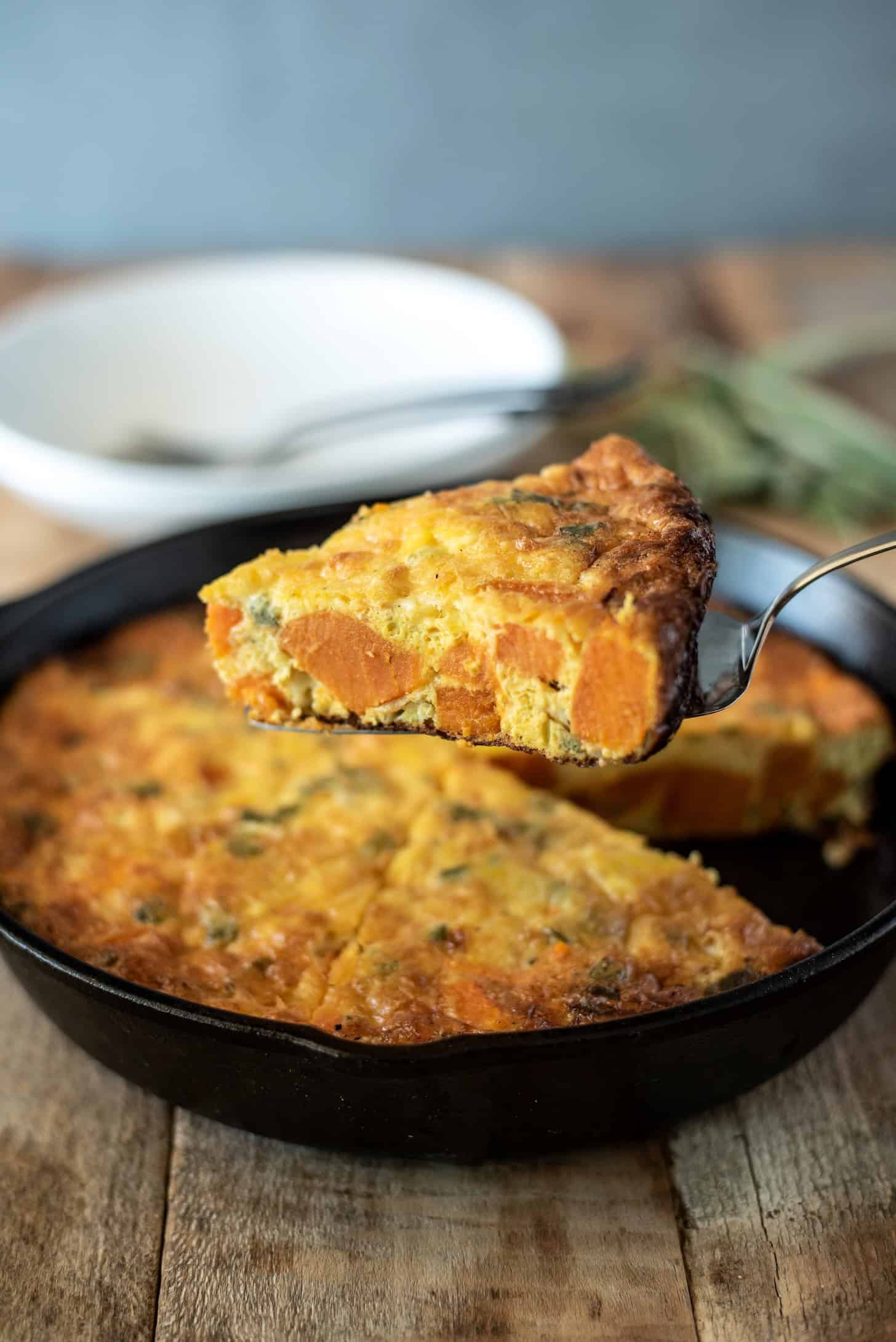
This versatile, make-ahead dish yields delicious leftovers, perfectly bridging the gap between a classic sweet potato hash and a fluffy baked omelet.
Whether you need an easy meal-prep breakfast for the busy workweek or a stunning centerpiece for holiday hosting, this healthy frittata recipe is a guaranteed winner that can be served hot, warm, or cold. Pair it with crispy bacon, a fresh green side salad, a piece of crusty toast, or fresh seasonal fruit for a complete and satisfying meal.
Table of Contents
- Why You’ll Love This Recipe
- Frittata vs. Spanish Omelet
- Sweet Potato vs. Yams
- The Secret to Perfect Sweet Potatoes in a Frittata
- Choosing the Best Cheese for your Frittata
- The Best Pan to Use
- No Cast Iron Skillet? No Problem!
- How Many Eggs do you Need?
- Should you Add Milk or Cream?
- Step-by-Step Cooking Guide
- How to Tell When Your Frittata is Done
- How to Prevent a Burnt Bottom
- Creative Mix-ins and Variations
- Storage and Make Ahead Instructions
- How to Reheat Leftover Frittata
Why You’ll Love This Recipe
- One-Pan Cleanup: It goes from the stovetop straight to the oven using just one skillet.
- Endless Customization: Think of it as a blank canvas for your favorite cheeses, veggies, or leftover meats.
- Any-Time Meal: Enjoy it hot right out of the oven, at room temperature, or even cold straight from the fridge.
- Great for Meal Prep: It stores beautifully and stays fresh for days.
Frittata vs. Spanish Omelet
While a frittata closely resembles a Spanish omelet (tortilla española), there is a key difference. A traditional Spanish omelet relies on a rigid, specific set of ingredients – traditionally just eggs, potatoes, onions, and olive oil. A frittata, on the other hand, is completely customizable and welcomes a wide variety of meats, cheeses, and vegetables.
Sweet Potato vs. Yams
Though most grocery stores in the U.S. label those bright orange-fleshed tubers as “sweet potatoes” or “yams” interchangeably, they are technically sweet potatoes. True yams are starchy, bark-skinned roots native to Africa and Asia.
For this recipe, look for standard orange-fleshed sweet potatoes, which pair exquisitely with winter spices and herbs. While the flavors feel deeply tied to autumn and winter, sweet potatoes are readily available year-round.
The Secret to Perfect Sweet Potatoes in a Frittata
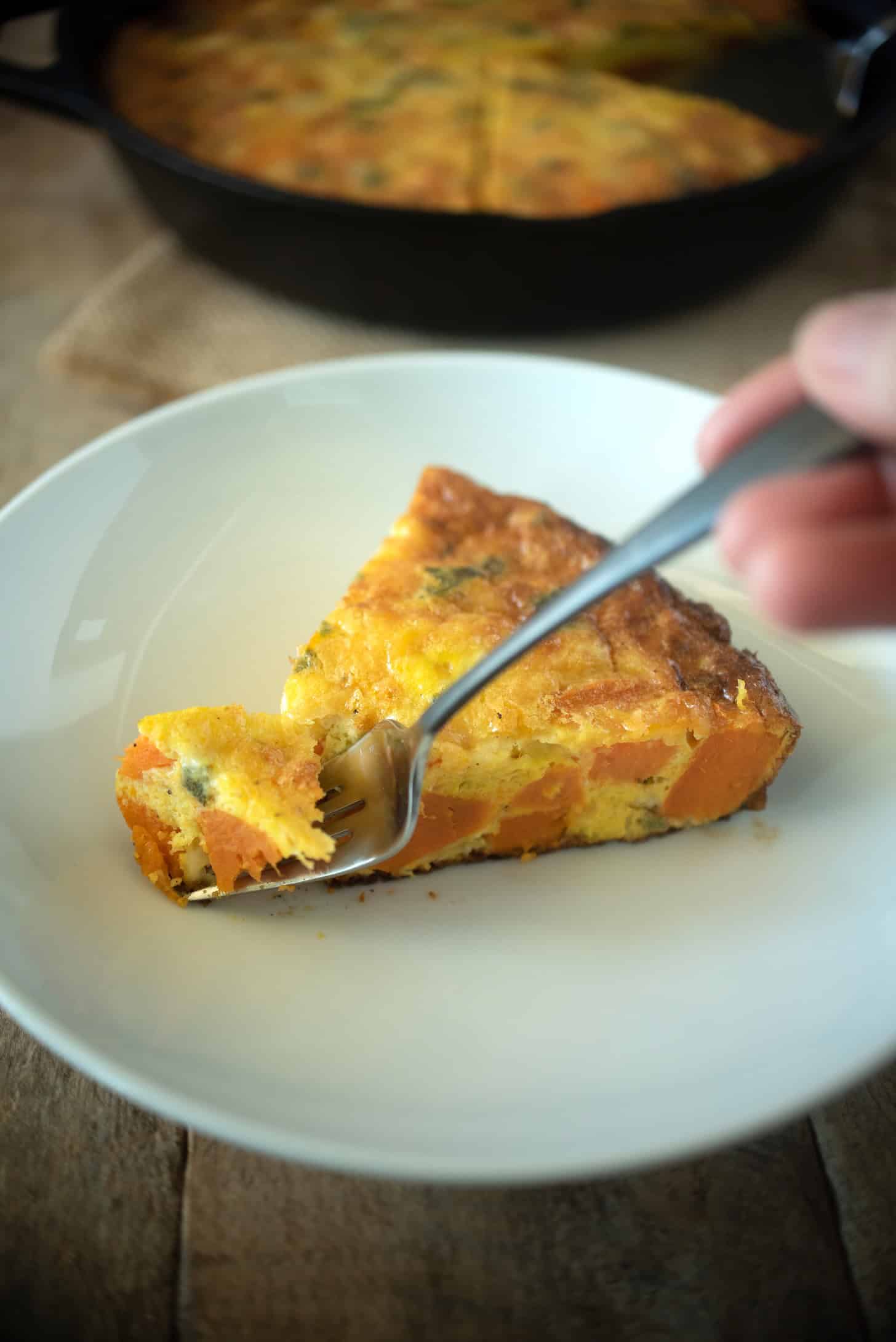
Because dense root vegetables take a long time to cook, you must partially cook (par-cook) the sweet potatoes before adding them to the egg mixture. If you add them raw, the eggs will completely overcook and turn rubbery before the potatoes soften.
You can par-cook your sweet potatoes using one of three easy methods:
- Microwave: Poke holes in the skin and microwave whole until slightly tender, then peel and dice.
- Oven Roast: Peel, cut into bite-sized pieces, toss with a little oil, and roast on a baking sheet until just tender.
- Boil: Peel, dice, and boil in salted water for a few minutes until fork-tender.
Choosing the Best Cheese for your Frittata
Adding cheese is a fantastic way to introduce creaminess and sharp, savory contrast. In this recipe, the combination of grated Fontina and Parmesan cheese beautifully complements the earthy sage.
Want to switch it up? Try these alternatives:
- Sharp cheddar or Gruyère for a classic, rich flavor
- Creamy goat cheese (chèvre) or cream cheese dolloped on top
- Whole-milk ricotta (similar to my Ricotta and Spinach Frittata) for a light, pillowy texture
The Best Pan to Use
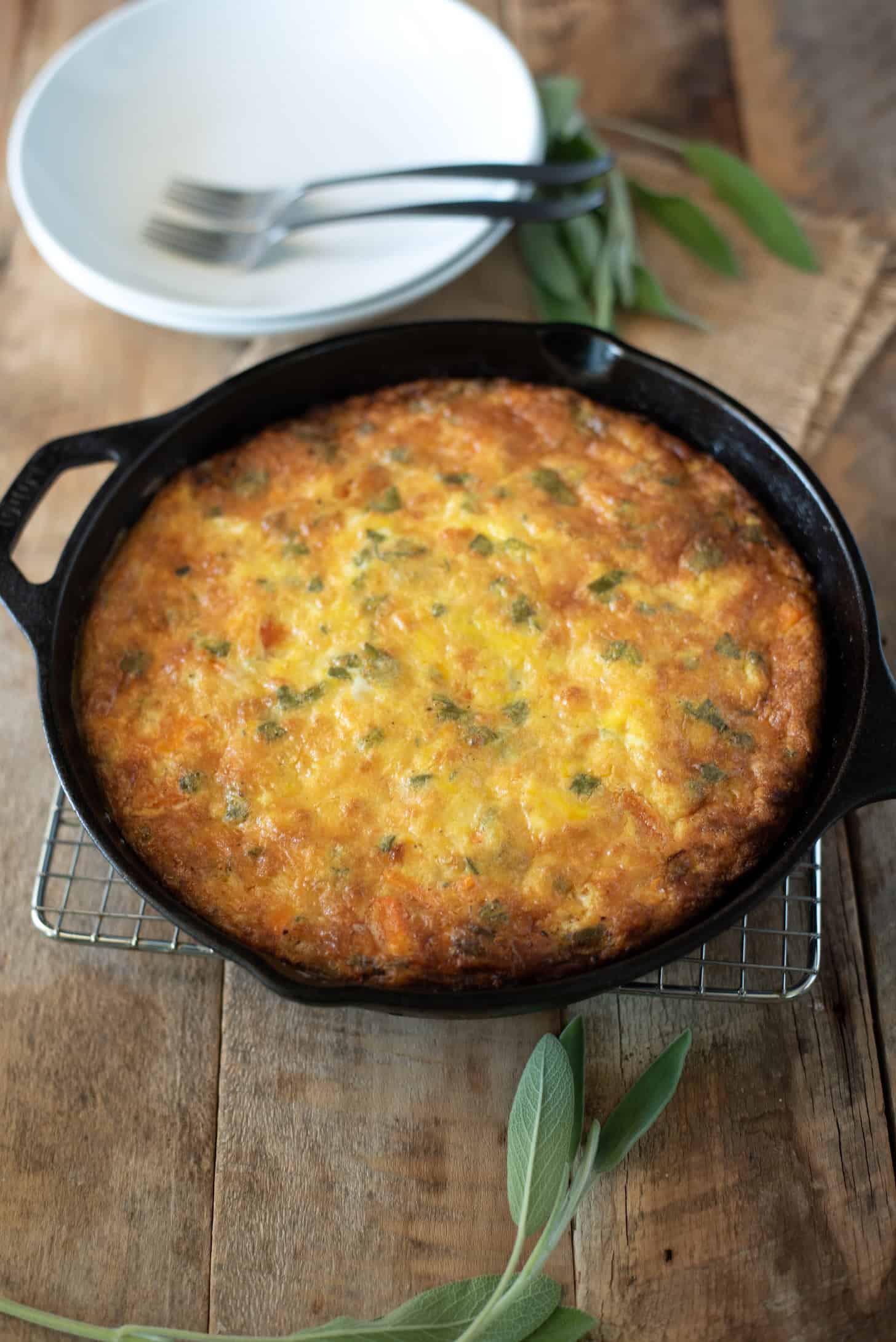
For a flawless bake, use a well-seasoned cast-iron skillet or any heavy-bottomed, oven-safe pan. Heavy pans distribute heat evenly and move seamlessly from the stovetop to the oven. Avoid using standard stainless steel pans, as eggs have a notorious tendency to stick tightly to them.
No Cast Iron Skillet? No Problem!
If you don’t have a cast-iron pan, you can still easily make this recipe using one of these options:
- Any Oven-Safe Skillet: A heavy-bottomed non-stick skillet or anodized aluminum pan works great. Just double-check that the handle is metal or silicone and rated safe up to 350°F (175°C). Avoid standard stainless steel, as eggs stick to it easily.
- The Stovetop-to-Casserole Method: Sauté your onions in a regular frying pan on the stove, mix everything in your bowl, and then pour it into a greased 9-inch pie dish or an 8×8-inch baking pan. Bake it directly in the oven at 350°F (175°C) for roughly the same time (40–50 minutes) until set.
How Many Eggs do you Need?
Your egg count depends entirely on the size of your skillet. As a general rule of thumb, plan for 2 large eggs per person.
- 8-inch (20 cm) pan: Use 8 large eggs.
- 10-inch (25 cm) pan: Use 10 large eggs.
Note: Cooking 10 eggs in an 8-inch pan will yield a much thicker, taller frittata that may require a few extra minutes of baking time.
Should you Add Milk or Cream?
While adding extra liquid isn’t strictly traditional in Italy, a splash of dairy can do wonders for the texture. Adding 1 to 2 tablespoons of whole milk or heavy cream per egg will give your frittata a softer, fluffier, and lighter consistency.
Step-by-Step Cooking Guide
Prefer a visual guide? There is also a full, step-by-step video tutorial waiting for you in the recipe card at the bottom of this post.
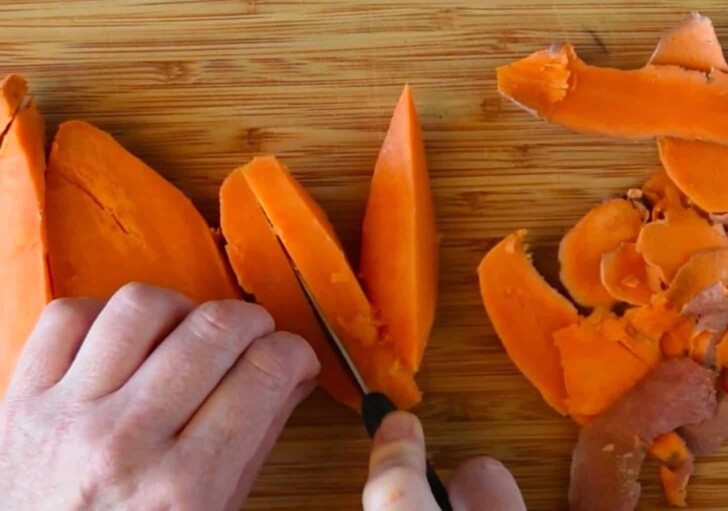
Preheat your oven to 350°F (175°C). Partially cook your sweet potatoes using your preferred method (this can be microwave or oven) and dice them into bite-sized pieces.
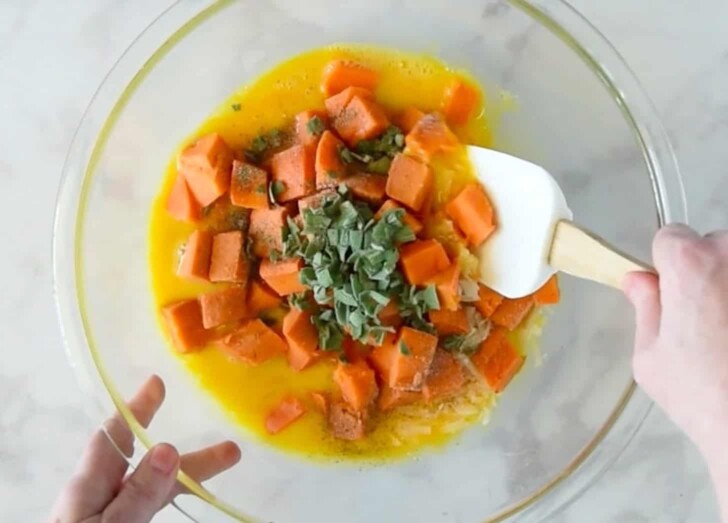
In a large mixing bowl, vigorously whisk your eggs. Stir in the cheeses, par-cooked sweet potatoes, fresh chopped sage, a generous pinch of kosher salt, and freshly cracked black pepper.
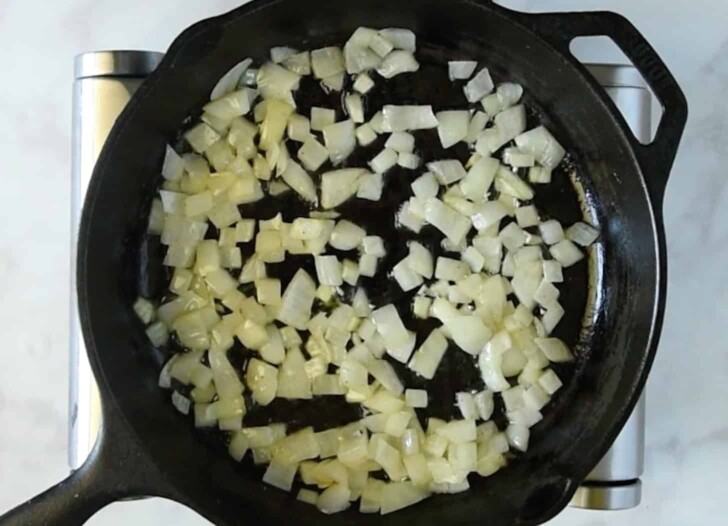
Heat your cast-iron skillet over medium heat. Add a splash of oil or butter and soften diced yellow or red onions until translucent.
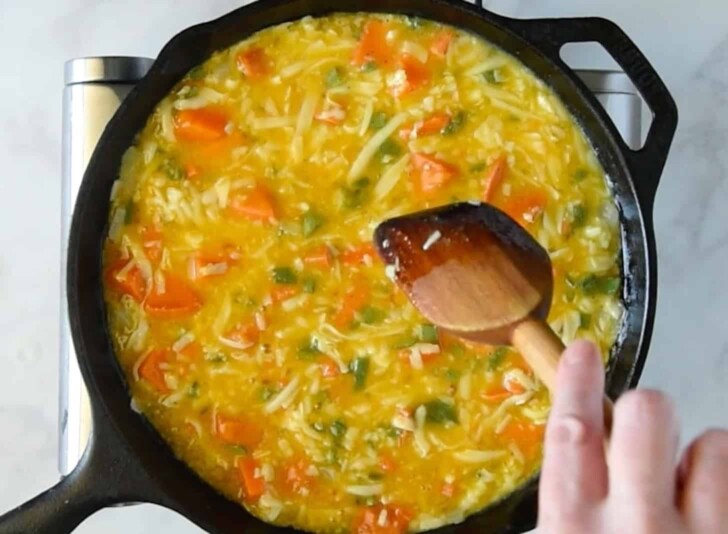
Pour the egg mixture directly into the skillet with the onions. Stir gently to distribute the ingredients evenly. Transfer the skillet to the upper rack of the oven and bake until the top is set and slightly golden brown.
How to Tell When Your Frittata is Done
Keep a close eye on your oven. Your frittata is perfectly cooked when the eggs are completely set on top with no liquid visible. If you give the pan a gentle shake, the center should not jiggle. Once out of the oven, let it rest in the pan for 5 minutes before slicing so it holds its shape.
How to Prevent a Burnt Bottom
If your skillet sits too low in the oven, the bottom of the pan gets hotter than the top, causing the eggs to burn underneath before the center sets. To fix this, always keep the pan in the upper 1/3 of the oven. For extra insurance, you can layer the bottom of your oiled skillet with thinly sliced, par-cooked sweet potatoes to create a protective, flavorful “crust.”
Creative Mix-ins and Variations
A frittata is the ultimate “clean-out-the-fridge” meal. You can easily upgrade this base recipe with leftover cooked meats or vegetables:
- Greens & Herbs: Baby spinach, fresh thyme, or rosemary.
- Savory Meats: Crispy bacon crumbles, chopped ham, or cooked sausage.
- Sweet Crunch: Diced butternut squash.
- The Italian Twist: Toss in leftover cooked pasta for a traditional, extra-hearty texture.
Important Tip on High-Moisture Veggies: If you add vegetables that release a lot of water – like bell peppers, mushrooms, or zucchini (courgettes) – you must pre-cook them to evaporate their moisture. Adding them raw will make your frittata wet, soggy, and watery.
Storage and Make Ahead Instructions
Frittatas are a dream for meal prep because they taste just as good the next day. Let the frittata cool completely, slice it into wedges, and store them in an airtight container. It will keep beautifully in the refrigerator for up to 4 days. Serve it cold, let it come to room temperature, or gently reheat a slice in the microwave or toaster oven for a quick weekday breakfast.
How to Reheat Leftover Frittata
To keep the eggs light and fluffy without turning them rubbery, use one of these reheating methods:
- The Oven/Toaster Oven (Best Texture): Preheat your oven to 350°F (175°C). Place the frittata slice on a baking sheet, cover it loosely with foil to prevent it from drying out, and warm it for 10–12 minutes until heated through.
- The Microwave (Fastest): Place a slice on a microwave-safe plate. Cover it with a damp paper towel to lock in moisture. Microwave on 50% power in 30-second intervals for about 1 to 1.5 minutes. Lower power ensures the eggs don’t get tough.
- The Skillet (For a Crispy Edge): Heat a non-stick skillet over medium-low heat with a tiny dab of butter. Add the slice, cover with a lid to trap the heat, and warm for 3–4 minutes per side until the edges get slightly crisp again.
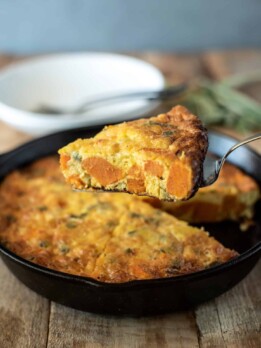
Easy Sweet Potato and Sage Frittata

Video
Ingredients
- 1 ½ pounds (680 grams) orange sweet potatoes, you can also used leftover cooked sweet potatoes, diced
- 10 large eggs, beaten
- 1 cup (100 grams) fontina cheese, grated
- ½ cup (50 grams) Parmesan cheese, grated
- 1 teaspoon salt
- ½ teaspoon ground black pepper
- 1 tablespoon unsalted butter
- ½ cup (64 grams) onion, chopped
- 3 tablespoons fresh sage, chopped
Instructions
Prep the Oven:
- Preheat the oven to 350°F (175°C) with the rack positioned in the upper ⅓ of the oven. This ensures the top of the eggs set properly without burning the bottom of the dish.
Par-Cook the Sweet Potatoes:
- Pierce the sweet potatoes all over with a fork. Microwave for 2 minutes, flip, and microwave for another 2 minutes. They should be slightly softened but not fully cooked through. (Skip this step if you are utilizing leftover pre-cooked potatoes).
Cool and Dice:
- Place the microwaved potatoes in the refrigerator for a few minutes to cool quickly. Once safe to handle, peel the skins off and chop the potatoes into ½-inch (1.25 cm) pieces.
Mix the Egg Base:
- In a large bowl, combine the beaten eggs, grated Fontina, grated Parmesan, diced sweet potatoes, chopped fresh sage, salt, and black pepper. Stir well to distribute the ingredients evenly and set aside.
Sauté the Aromatics:
- Melt the unsalted butter in a 10-inch cast-iron skillet over medium heat. Once it is bubbling, add the chopped onions and sauté until softened and translucent, about 8 to 10 minutes. (If you do not have an oven-safe skillet, sauté the onions in a regular frying pan, then stir them into your egg bowl and pour the entire mixture into a well-greased 9-inch (23 cm) pie dish or 8×8-inch (20 cm) baking pan).
Bake:
- Transfer your cast-iron skillet (or your greased baking dish) to the upper rack of your preheated oven. Bake for 40 to 50 minutes.
Test for Doneness:
- The frittata is finished when the top shows no liquid, is slightly golden, and does not jiggle when you gently shake the pan.
Rest and Serve:
- Remove from the oven and let it rest in the pan (or baking dish) for 5 minutes before slicing. Resting allows the eggs to fully set and prevents the frittata from weeping moisture when cut.
This was so easy and delicious! This was my first time making a frittata and the flavor combination was perfect.
I’m so glad you liked it.
Since this is a microwave-free house, I’m wondering if it would work to use leftover baked sweet potatoes? Or would they be too “squishy”?
This looks positively delicious, BTW, and I’m looking forward to making it — thanks!
This frittata is the perfect use for leftover sweet potatoes if you are able to cut them into pieces. I hope this helps.
I love everything about this recipe. The fritata looks so inviting. The ingredients are fresh and very summery.
I love Frittatas. I will have to check this out. Pinned.
My family would love this recipe!!! We love sweet potatoes and frittatas!
Me too. Thank you so much Jessica 🙂
Love the addition of fresh sage! Brings a lot of flavor to the dish! Yum!
It was the best part for me. Thank you for stopping by Abigail
Love the use of sweet potatoes in this frittata. (Good advice to pre-cook them, too)
Thank you Lydia 🙂
Love everything about this, sweet potato and sage all nestled in those lovely eggs!!
I adore sweet potatoes and bet this frittata is amazing. Perfect for Mother’s Day brunch!
This looks absolutely delicious and perfect for Mother’s Day!
What a lovely idea for a frittata! We love sweet potatoes so fo rsure your dish is going on my Sunday brunch menu sometime soon!
This sounds so delicious, I would have never thought to add sweet potatoes to a frittata. I will definitely give it a try. This is a great addition to any brunch menu.
I so love the idea of a sweet potato frittata. Bookmarking this for lunch in the next couple of weeks.
Sage is such a wonderful addition to this fritatta.
This looks amazing & so simple! Great job 🙂
What a great idea to add sweet potato into a frittata.
Thank you Dannii, I really enjoyed it 🙂
Gorgeous frittata here!
Your recipes are so simple even a bachelor can do them!
Thank you so much 🙂
Hello, Janette! 🙂 How wonderful to be invited over for brunch … and I would definitely feel special to be served this with a lovely side of bacon …. and coffee of course. This recipe makes me feel like arranging a brunch just so that I can have a go at it!
My goodness…this looks sooooo good!
This is so perfect for a seasonal brunch.
I need this in my life right now! Happy to have found this recipe.
Hi Sandra, I’m glad you found us too. Thank you for stopping by.
Oh I love the sound of and the ingredients of this sweet potato frittata! I don’t know if I can wait for a weekend though, I might have to make it sooner!!
Thank you so much for visiting.
Nice! I love everything about this dish! 🙂
This sounds so good! I’d love it if it would just come out of the computer right now so I could eat it. I’m so hungry!! Yum!
What a FANTASTIC idea for a frittata Janette! While I make them often, I never thought about using sweet potatoes. I can only imagine how rich and creamy it must taste! Well done and as usual, stunning photography!
Thank you Linda, it’s pretty tasty 🙂
I love Sweet potatoes/Yams. We never have time for brunch around here, but wow, I wish we did! 🙂 Pinned, SU and Tumblr’d
Thank you KC.
What a beautiful recipe Janette. Love all of the ingredients.
Thank you so much Patty.